Our Soil Testing and Restoration (ongoing!) Journey in Inhereted Orchard Spaces
SOIL RESTORATION PROJECT IN OUR ORCHARDS
What makes a healthy, thriving orchard?
Sunlight, water, pruning techniques, but most importantly, soil health. It is imperative that we take our tree health approach from ground up.
How and why we started a soil restoration journey
About a year ago, our guts were telling us that a soil test was needed for all of our orchards, many of which were simply planted over time in existing, up prepped spaces. We had started noticing patterns; some trees struggled with low fruit production, others showed signs of nutrient deficiencies, and overall vigor just wasn’t where it could, or should, have been. A whole potential of abundance was right in front of our eyes, going unmet! Our orchards are delightful, beautiful spaces of community and plenty, and we wanted them all to not just survive, but thrive.
It became clear that the source of the issue was below ground, and not where our eyes wandered above it. Something deeper was going on. We could see the physical indications of an unhealthy soil structure: the ground was hard and compacted, making it difficult for roots to grow, for water to move through, and even for tools like a soil probe to penetrate the surface. We sought out the care of soil expert Jen Aron, who’s an amazing scientist right here in Portland. Through her insights and scientific approach, we began to see the bigger picture. Soil is not just a medium to hold trees and other plants in place. It is a living system, and when that system is out of balance, everything above ground is affected.
As we dug into it with Jen’s lead, and got soil tests done, we found out that some of our long-standing practices, despite being well intentioned, were contributing to the problem. For some time now, we’ve partnered with the Portland Zoo where we donate tree debris for the animals and receive organic material from the animals, AKA manure (AKA ZooDoo) in return. But it appears that over time, repeated applications led to an excess of phosphorus building up in the soil. This imbalance began interfering with other nutrients, like a calcium deficiency in our soils, making it harder for trees to access what they actually needed.
We were also practising mulching (as you should) with woodchips and cardboard as part of our orchard management. While these are useful tools, and mulching is always an integral part of a healthy soil, we had gone too far. Instead of feeding and protecting the soil, it was suffocating it. But the reason for that in our orchards’ cases is that there was so little microbial life in the soil that the cardboard and the woodchips weren’t decomposing fast enough, which meant that instead of aiding the soil, our mulch was just becoming a burden on it. In some areas, we found wet, compacted conditions underneath that were far worse than bare or lightly covered soil nearby.
This shift in perspective marked the beginning of our soil restoration journey. Instead of focusing only on tree care from the outside, we began focusing on rebuilding the foundation that supports everything. It’s a slower, more intentional process, but it’s one that sets the orchards up for long-term health, resilience, and productivity.
Why soil health is so important and what are we doing right now?
Healthy soil is the foundation of everything that happens in an orchard, well, actually, in the whole world, in any setting! When soil is functioning properly, it supports microbial life, allows roots to grow freely, and makes nutrients available to trees. When it is not, trees struggle even if they are receiving all the sunlight, water, and care.
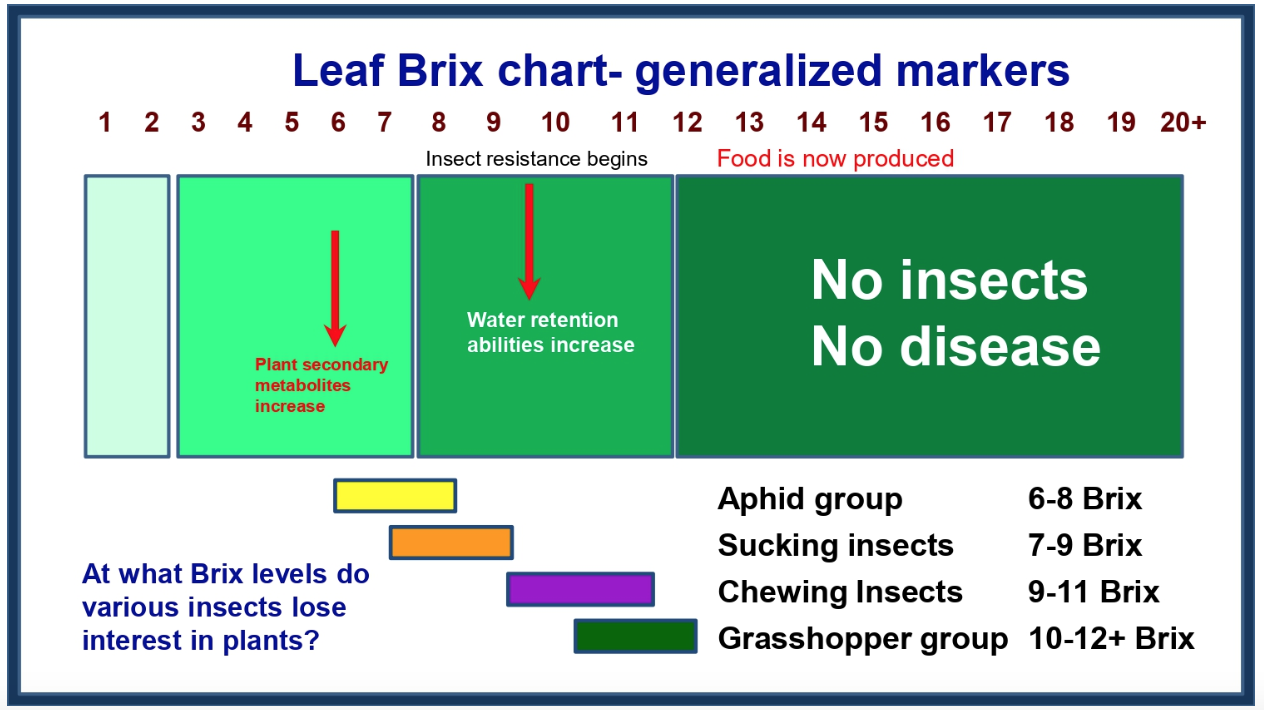
One concept that helped reshape our understanding is the idea of plant sugar levels, often referred to as Brix. When trees are able to take up nutrients efficiently, they store more sugars in their leaves. Higher sugar levels are associated with stronger, more resilient trees that are better able to resist pests, disease, and environmental stress.
Right now, our focus is on restoring balance and function in the soil rather than adding more inputs. We are removing excess mulch and cardboard, especially around the base of trees, to allow the soil to breathe again. We are being much more mindful about avoiding compaction by staying off the soil when it is too wet.
We are also addressing nutrient imbalances by avoiding more compost and manure, which would add more phosphorus, and instead applying targeted amendments like gypsum, boron, and humic acid. In addition, we are using trace mineral sprays combined with fish hydrolysate to give trees a direct boost of nutrients.
Another key part of this process is observation and measurement. We are now conducting soil tests and leaf tissue analyses to better understand what the trees are actually absorbing. These steps help guide our decisions and ensure that we are responding to real conditions rather than guessing.
We have already seen early signs of improvement! At one of our orchard sites, fruit production increased noticeably after the first round of amendments. While results like that are not guaranteed every year, or always so fast acting, they show that rebuilding soil health can make a real difference.
What will the next few years look like?
Restoring soil health is not something that happens overnight. It is a long-term commitment, and we are planning for a three to four year process to bring our orchards to their full potential of health and vigor.
Over the next several years, we will continue to test our soil at the same time each year to track changes in nutrient levels, organic matter, and biological activity. We will also continue leaf tissue testing to understand how well our trees are taking up nutrients. This consistency is important because soil biology changes with the seasons, and we want accurate, comparable data over time.
We will keep improving soil structure by reducing compaction, managing moisture more effectively, and introducing more plant diversity. In the future, we plan to establish perennial pollinator plantings, which will help create deeper, more complex root systems and further improve soil structure.
Irrigation is another area we are working to improve, especially at sites that currently lack consistent water access, as they were planted in opportunistic spaces sometimes without any water access at all. Supporting microbial life requires the right balance of moisture, and this will be a key part of our progress.
Most importantly, this work is ongoing and community-driven. Many of the improvements we are making happen during our work parties, where volunteers come together to care for the orchards. Whether it’s helping apply soil amendments, managing mulch, or preparing areas for future planting, every bit of effort contributes to healthier soil and stronger trees.
If you want to be part of this process, we invite you to join us at an upcoming work party. And if you are not able to attend in person, donations directly support the materials, testing, and infrastructure needed to continue this work. We want Portland to learn alongside us as we continue to work to steward these orchards and use our learnings to provide broader help to fruiting tree and plant owners in Portland’s Urban Orchard.
This is not just about growing fruit. It is about rebuilding living soil and creating orchards that are resilient, productive, and sustainable for years to come.